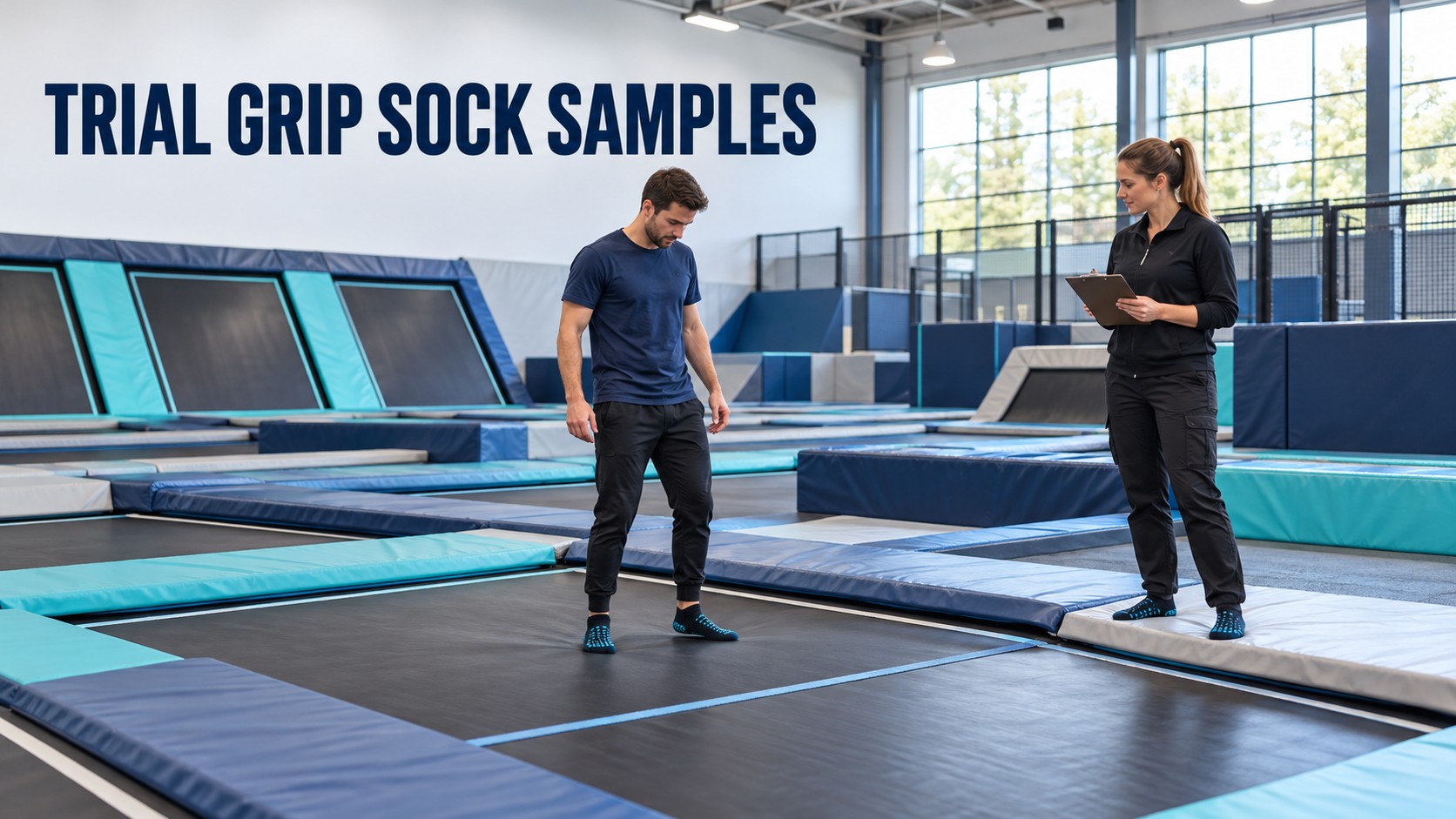
Trial trampoline park grip socks where guests will wear them. Compare each sample with your current approved pair on the same clean bed and padded deck. Record foot fit, sock movement, and grip condition separately. A good first impression is not enough to approve a bulk order.
Build a sample set you can compare
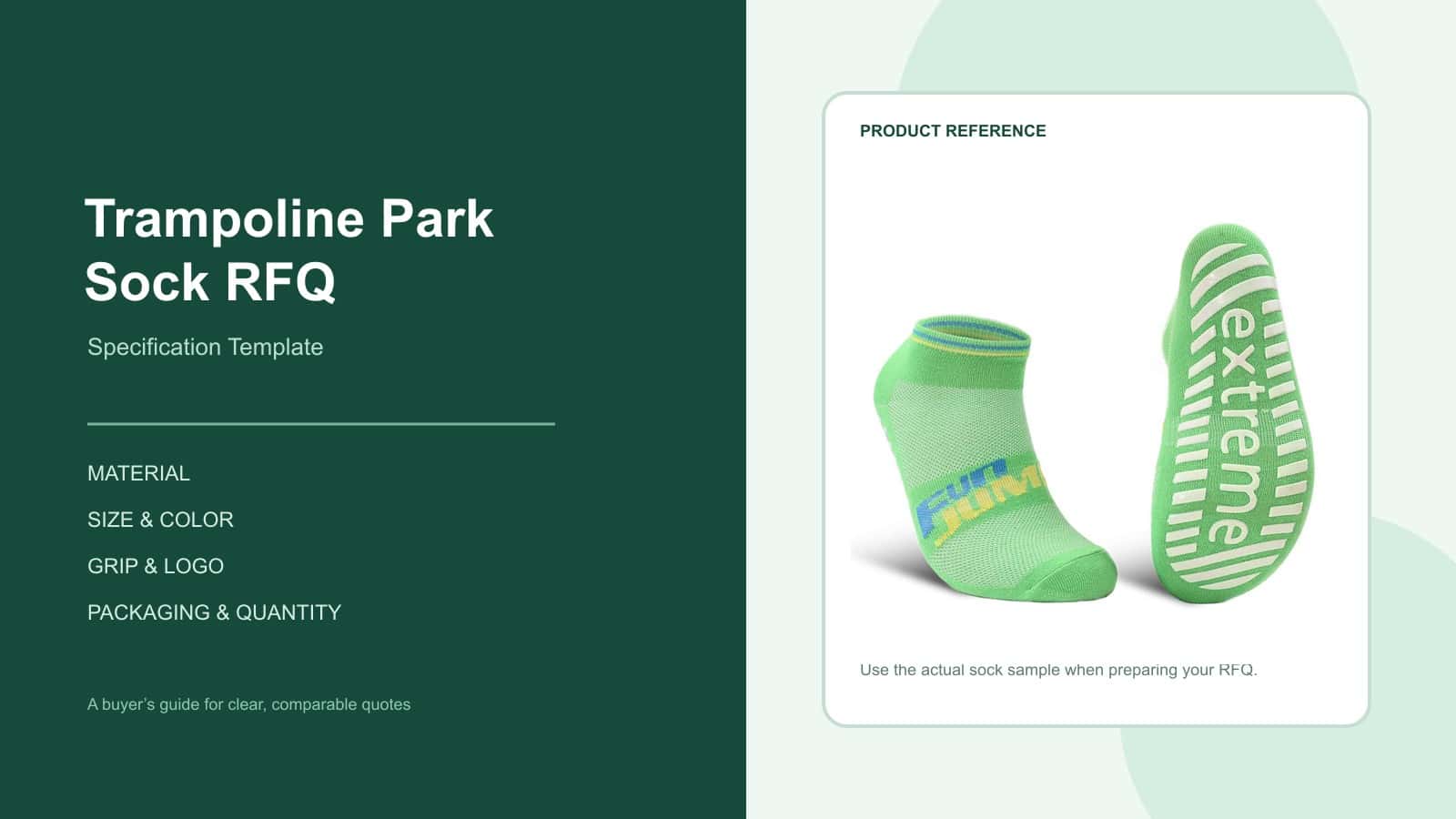
Ask each supplier to identify the exact construction: yarn blend, size range, grip material and layout, cuff, care instructions, and sample version. Mark every pair with a code. Keep the supplier’s wording attached to that code.
- Reference: Keep one unworn pair of each proposed construction. Photograph both soles and measure the flat foot length before testing.
- Wear pair: Use a second pair for the controlled bed and deck trial.
- Care pair: If reuse or laundering matters to your program, reserve another pair for the approved wash routine and a repeat trial.
This is a practical pilot set, not a statistically valid sampling plan. Test each proposed size, especially feet near the lower and upper ends of its labeled range. A single adult medium cannot validate a toddler-to-adult size run.
Keep your current approved sock as a comparison, if one exists. It is a local reference, not proof that either product meets a formal traction standard. Put the proposed construction and size range into your trampoline sock specification before testing.
Map the bed and padded deck separately
Choose a representative bed and a padded walking or transition area that your park permits for this trial. Do not assume a hard lobby floor predicts either result. Check the equipment maker’s rules and your own operating procedure first.
| Surface | Controlled task | What to watch | Record separately |
| Trampoline bed | Normal standing, step placement, and low movement allowed by your court rules | Unexpected sock-to-bed movement, heel drift, or grip catching | Bed ID, bed condition, wearer, pair code, observation |
| Padded deck or walkway | Ordinary walk, stop, and turn within the designated path | Unexpected slide, sock twisting, bunching, or loss of heel position | Pad material/location, clean/dry state, wearer, observation |
| Bed-to-deck transition | Normal exit and re-entry only if your rules allow it | Change in feel or fit between surfaces | Which direction, location, and any issue |
Inspect the surfaces first. Loose debris, wet cleaning residue, torn pads, or a damaged bed can distort the comparison. Fix or isolate the facility issue before judging the sock.
Run a controlled, low-intensity trial
Set stop conditions before starting: unwanted movement, catching, peeling, or unstable fit. Record pair version, size, surface, cleaning state, test order, observation, action, and approver.
- Close the test area to guests. Use trained staff and a spotter under the park’s normal court rules. Do not add deliberate slides, hard landings, or other maneuvers to “prove” grip.
- Start with fit. Note the wearer’s foot size. Check toe room, heel placement, cuff hold, and whether the grip sits under the heel and forefoot.
- Use the same route. Have the tester perform the permitted bed and deck tasks in the approved pair and the candidate. Keep surfaces, cleaning state, and movement sequence the same.
- Reverse the order. Have another suitable tester try the candidate first, then the approved pair. This reduces the chance that warming up or fatigue explains every difference.
- Stop on a clear problem. Stop if a pair shifts, unexpectedly slides, catches, or shows grip lifting. Write what happened and where; do not ask for a more aggressive repeat.
For child sizes, arrange fit and use checks only under the park’s normal consent and supervision rules. Do not treat an adult in an oversized child sock as a valid substitute for a correctly sized wearer.
Repeat the same sequence when a result is ambiguous and conditions are suitable. A single comment such as “feels grippier” is weaker than a recorded observation at a named surface and movement.
Diagnose what actually moved
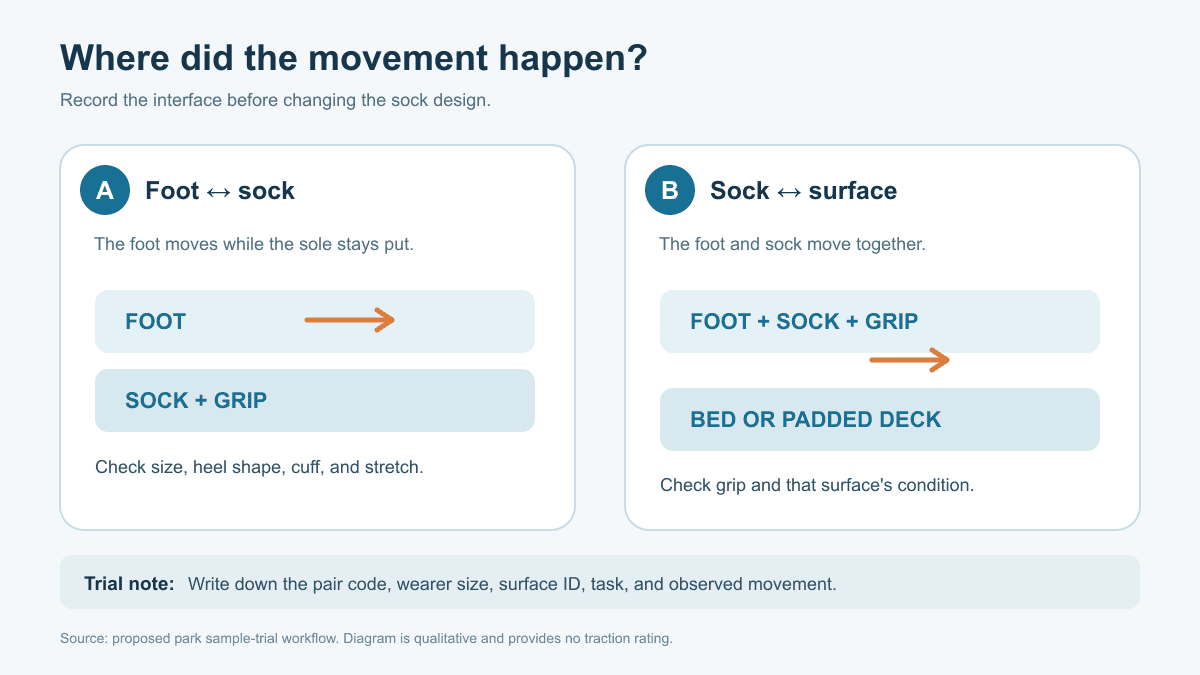
“The sock slipped” can describe two different failures. Ask the wearer where movement occurred, then inspect the pair before changing the grip pattern.
| Observed problem | Likely interface to check | Next action |
| Foot turns inside sock; sole dots stay planted | Foot to sock | Check size, heel shape, cuff recovery, and fabric stretch. |
| Sock and foot move together over the bed or pad | Sock to surface | Check sole coverage and grip condition; repeat on a clean, dry surface. |
| Grip catches abruptly or sheds material | Grip and surface interaction | Stop the trial; inspect sock and equipment surface before any redesign. |
| Only one location causes trouble | Local surface condition | Inspect and document that location before blaming the whole sock design. |
This distinction keeps the next sample request precise. A tighter size may fix internal foot movement. More grip dots will not fix a loose cuff, and a fit change will not repair peeling grip.
Wash, repeat, and sign off the exact version
If guests reuse the socks or your park launders them, test the care method approved for that product. Log the cycle, detergent, drying method, and count. Compare the washed pair with its unworn reference for shrinkage, cuff change, color transfer, and grip lifting.
Run the same bed and deck sequence again after full drying. Do not convert a few successful washes into a claimed product lifespan. Define any required wash count and acceptance criteria with the supplier before the pilot.
Use a short decision record for each sample version:
- Approve for order: The tested sizes fit, no trial-stopping issue was observed, and the written specification matches the retained reference.
- Revise and retest: Fit, grip placement, or care changes are requested. Give the revised sample a new version code.
- Reject: Repeated unwanted movement, damaged grip, or incompatible surface behavior remains under controlled conditions.
Keep the signed sheet, photos, sample codes, surface notes, and retained pair with the purchase file. Check the pre-production sample and first bulk delivery against that approved version; a change in yarn, size, or grip process needs review.
FAQs about grip sock sample trials
Can we test samples on an office floor instead?
An office floor can reveal obvious fit problems. It cannot stand in for your bed and padded deck. Test each permitted venue surface before approving the construction.
Should we choose the pair that feels stickiest?
No. Compare stable fit, controlled movement, grip integrity, and surface compatibility. Excessive catching is also a reason to stop and investigate.
Does a successful staff trial certify the socks as safe?
No. It is an internal purchasing screen. Keep following the equipment maker’s instructions, venue rules, and any independent testing your program requires.
What if the supplier changes the grip after approval?
Request a new coded sample and repeat the affected checks. A sign-off on one construction does not automatically cover another grip compound or layout.
Bring your test brief to us
We make custom socks for trampoline parks. Review our trampoline sock range, then contact us with your size mix, bed and deck materials, proposed care method, and sample-trial notes. We can discuss the construction you want to evaluate.