Do not use age alone to decide whether a pair can return to the court. Check grip, fabric, fit, and cleanliness at entry. If a defect is clear, replace the pair. If the cause is uncertain, hold it off the court until a supervisor decides.
Set the rule before the queue forms
Write down which brands or styles your park accepts. Then use the same condition check for every returning pair. Your entry rule should be easy to explain in one sentence: “We accept approved grip socks that are clean, dry, intact, and still fit.”
Reuse policies differ. Your policy decides which styles are eligible; the inspection decides whether an eligible pair remains usable.
- Guest-owned pair: Do not call it “discarded.” Decline it for court entry and offer an approved replacement under your park’s sales policy.
- Park-owned pair: Remove it from circulation. Mark a questionable pair “hold” so another shift cannot issue it by mistake.
- New retail stock: A defect seen before sale is a stock-quality issue. Separate the affected stock and record the batch, not just the single pair.
Do the check where staff can see both soles, not while the guest is already jumping. If a problem appears during a session, stop that pair’s use and apply the same decision rule.
Use this grip sock inspection card
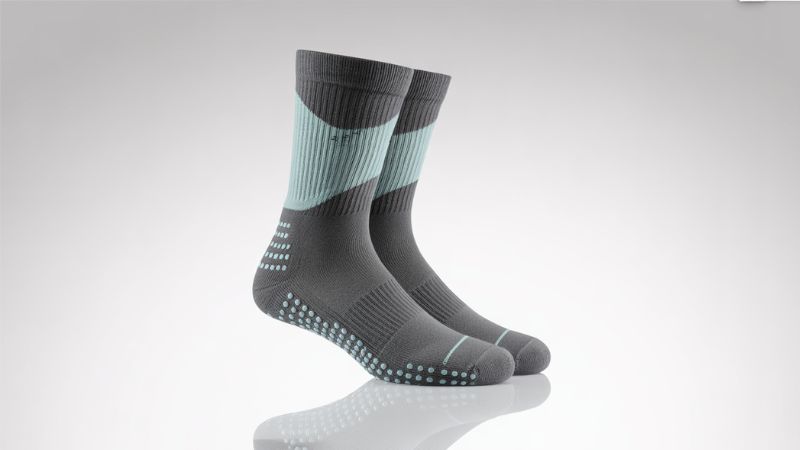
Put a clean, approved sample beside the desk when possible. It gives staff a reference for the original grip coverage and fit. Do not turn appearance into an unverified traction score.
| Check | Pass: allow under park policy | Hold or replace |
| Grip under heel and forefoot | Elements remain attached and raised in the designed zones. | Replace if dots are missing, flattened, cracked, or peeling in a loaded area. |
| Fabric at toe, heel, and ball | Knit is intact and covers the foot. | Replace for holes, exposed skin, or visibly threadbare fabric. |
| Cuff and heel position | Sock stays up; heel sits where intended; sole grips face the floor. | Try the correct size if fit is the issue. Replace a stretched pair that still twists or slips. |
| Clean and dry state | Pair is dry and free of visible contamination or loose debris. | Hold a wet or dirty pair. Admit it only after approved care and a fresh check. |
| Unclear grip complaint | No defect is found after the pair is clean, dry, and checked against the reference. | Hold it for supervisor review. Do not ask a guest to “test” it by jumping. |
A small loose edge can grow during wear. Do not trim a peeling grip dot and return the pair to use. Reapplying grip material also changes the product; treat that as a new, unapproved construction.
Make the entry decision in a fixed order
- Check eligibility. Confirm the style is allowed at your venue. Do not spend time grading a pair your policy does not accept.
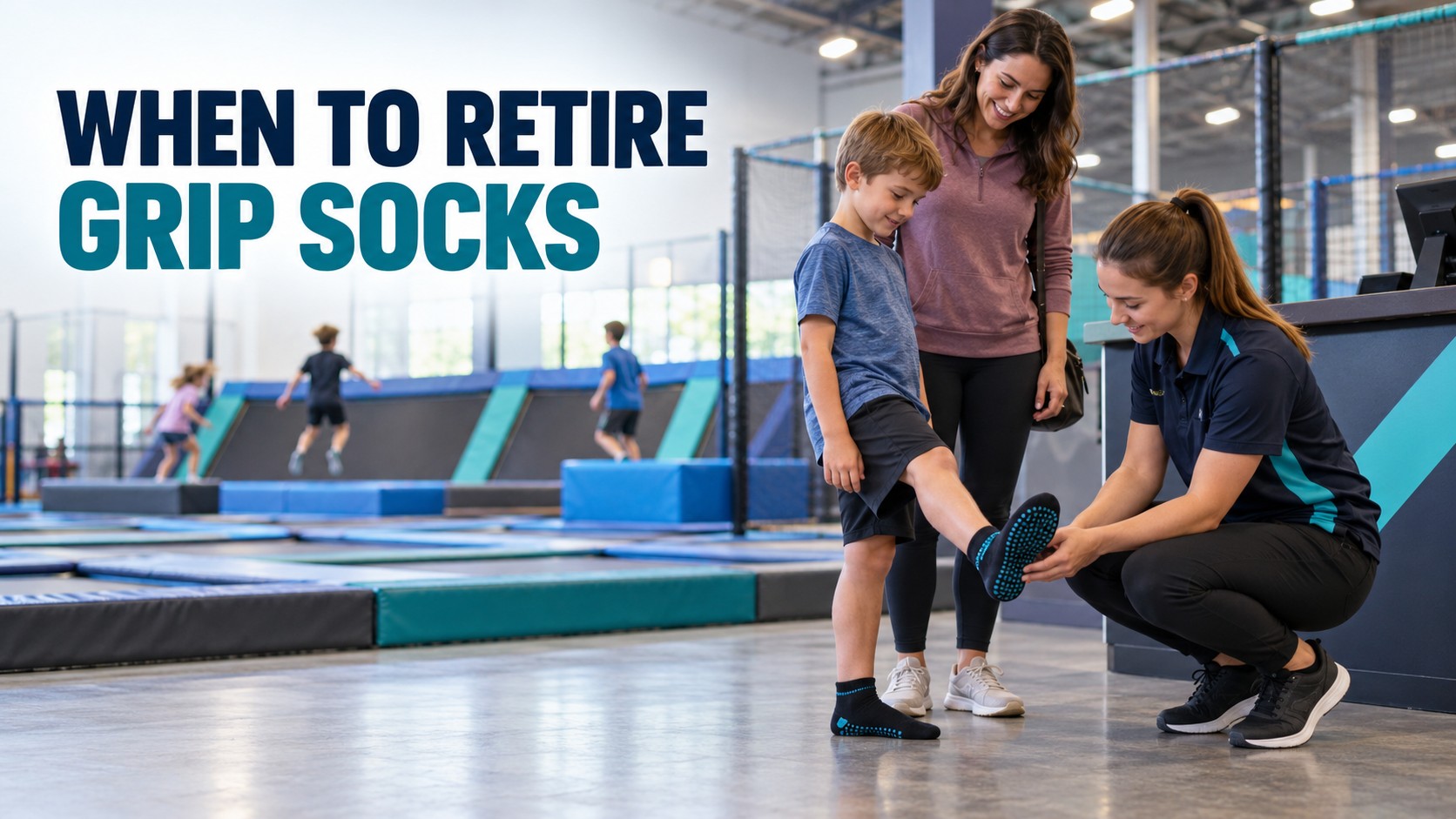
- Look at both soles. Ask the guest to show the heel and forefoot. Check for bare zones, lifted edges, and debris.
- Check the knit and fit. Look at the toe and heel. Have the guest pull the sock on normally; a rolled cuff or shifted heel can hide a sizing problem.
- Choose one status. Pass, hold, or replace. Give the guest a short reason tied to the visible issue, such as “the heel grip is peeling.”
- Record repeat defects. For a park-issued design, tally the defect type and batch when the same issue keeps appearing.
Teach this order at the front desk and court entrance. A supervisor should settle borderline cases. Avoid sending a guest between employees who apply different standards.
Know when to hold instead of retire
“Hold” means no court use until the issue is resolved. It is useful for a wet pair, a visibly dirty sole, or a complaint about grip when the grip pattern still looks intact. A hold is not an automatic pass after drying.
For park-owned pairs, follow the care instructions for that exact product. After cleaning and full drying, inspect again. If the grip is still questionable, retire it. Our guide to grip sock lifespan explains why wear cannot be reduced to a fixed number of months.
For guest-owned pairs, do not promise that washing will restore traction. The guest may clean the pair at home, but it must meet the same entry standard on the next visit. Missing or detached grip cannot be washed back on.
Never use a “try one jump and see” decision. A controlled supplier sample test belongs in purchasing, with an agreed method and your actual trampoline beds and padded decks. It does not belong in a live guest queue.
Turn retired pairs into purchasing data
One worn pair says little about a shipment. Repeated defects in the same place are useful. Keep a simple log for your own sock program, especially when a new batch or design enters service.
| Log field | What staff should enter | Why it helps |
| Style, size, batch | Packaging code or receiving record, when available | Separates a sizing issue from a batch issue. |
| Defect and location | For example: peeling at forefoot, hole at heel, loose cuff | Shows which part fails first. |
| Use and care context | Known visit count or park laundry method; leave unknowns blank | Prevents guessed lifespan figures. |
| Action and photo | Pass, hold, replace, or stock quarantine; photo of repeated defects | Gives the buyer evidence to discuss with the supplier. |
Review the log by batch, not by anecdote. If several new pairs show the same peeling pattern, quarantine the remaining stock and send the supplier photos plus the approved sample and care history. Ask for an explanation before you reorder that construction.
For guest-owned socks, a simple tally of rejected reasons is enough. You do not need a guest’s name to see whether “wrong style,” “hole,” or “worn grip” causes most desk disputes.
FAQs about grip sock replacement for trampoline parks
How long do grip socks last in a trampoline park?
There is no reliable universal month or visit count. Surface, use, fit, and care differ. Retire by the visible and functional condition rules your park has approved.
Can a guest reuse socks bought at the park?
Yes, if your park allows reuse and the returning pair passes its entry check. State your rule on the ticket page and at check-in so guests know before they arrive.
Do faded printed dots mean the pair must go?
Color change alone is not a traction test. Check whether the grip elements remain attached, raised, and in the intended zones. Replace a pair with missing, flat, or peeling grip.
Can staff repair a peeling grip dot?
Do not treat a trim, glue, or home-applied coating as a repair to an approved sock. Replace the pair and log early peeling if it recurs in one batch.
Plan your next sock order with us
We make custom trampoline socks for parks. Use your inspection log to tell us which grip, fit, or care problems need attention. Explore our trampoline sock range, then contact us with your sample, size range, and defect photos.